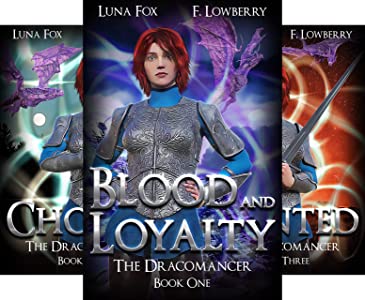
Parthenis is a high-fantasy, high-magic, Victorian/early-industrial technology world dominated by the constant presence of technological advancement trying to overcome magical knowledge. As a planet, Parthenis is a standard Earth-like world, orbited by three moons–named after the world’s dominant deities per culture. Currently, the world sits in the year 1145 P.C. (Post-Concordat)
Biomes consist of Earth-like flora, fauna, and climate, interspersed with zones of strongly magical nature, high and dark fantasy creatures, metahumans, and other supernatural beings–some of which have been adopted into society.
The world is politically divided in city-states, each of which institutes its own laws and has its own vassal villages and smaller communities. Due to that, the borders between territories aren’t always fully clear, though after centuries of constant conflict, the Concordat of Amity was signed in year 0 of the current era, putting a relative end to the constant warfare.
Dragons embody the seven elemental essences of the world: Light, Dark, Fire, Water, Air, Earth, and Aether. They serve as protectors of Parthenis’ balance, guarding it against threats from other realms. Dragons are scarce, however, as it’s been ingrained in the world’s culture, through unknown conspirators, that they’re evil and must be destroyed, which has led multiple noblemen purchase their body parts–blood, bile, livers and other pieces–to create powerful potions and enchantments, bringing their population down. Regardless, the world’s prominent spellcasters have created safe havens for dragons to be safe.
Dragon populations still dwindled, however, as they’re not meant to be in relative captivity. This also diminishes their ability to maintain balance in the world, leading to extreme weather conditions, turmoil, and attacks from extra-dimensional beings. As such, Dracomancy Academies were created, where certain individuals–nobility most of the time–were chosen to be soul-bound to a dragon hatchling and together become Dracomancers–the new guardians of Parthenis.
Dracomancers’ physical and magical abilities are enhanced through their dragon’s power, as they can join together to perform tremendous feats. Through their bond, their emotions and strengths are linked–but so are their weaknesses. As such, a Dracomancer must learn to augment his or her strength and their dragon’s, while mitigating their mutual weaknesses. Dragons don’t possess the ability to speak, as their larynxes are incapable of producing human language beyond monosyllabic grunts and growls, regardless, they’re capable of communication and highly intelligent.
Despite the “peace” imposed by the Concordat of Amity, turmoil remains across the world, as city-states form their own alliances, forces and factions war for dominance, and wild dragons are frequently hunted, reducing their already diminishing population.
Parthenis species
Humans
The most prolific species on Parthenis, humans encompass the brunt of sentient creatures on the planet. Their origin is unknown, which is why they’re seen as a “plague” by the elder races of the world. They’re capable of magical feats, as well as becoming capable Dracomancers.
Geans
The original inhabitants of Parthenis and the second most prolific species
in the world, they’re strongly attuned with the elements of the world, which
causes their bodies to embody their elemental disposition. This causes a strong
caste and social divide within gean society, as Light geans are seen as noble and
pure, while Dark geans are seen as the embodiment of evil, while other elemental
dispositions fill different roles; this is merely cultural, however – as sentient
species, every gean is capable of defining their own morality.
Geans are far longer-lived than humans, living a median of six-hundred years; due
to this, they’re comparatively less prolific, most siring two children at most.
They possess a strong magical affinity to their elemental disposition, with a
marked aversion to their elemental opposite. Though there are known cases of
Magic-aligned geans, they’re thought to be myth, rather than reality.
Nosferati
After the Final War (42 To Concordat – 0 P.C.) traces of powerful
magical contamination lingered in the most active battlefields of Parthenis. The
laws of nature were desecrated in these places, giving birth to nosferati – the
undead. Though folklore traditionally sees them as evil, repugnant creatures, most
nosferati merely wish to live their lives in peace. Regardless, they’re usually
discriminated against on account of their origin.
There are two categories of undead: sentient and feral. The former retain their
personality and intelligence, and vie for acceptance in modern society, while the
later are more akin to wild, aggressive animals incapable of sentience.
Nosferati were recognized as a species in 341 P.C. as they led a peaceful march
into the city of Lingrad –a human enclave,- demonstrating their intelligence.
Though the peregrination ended in a massacre against the nosferati, they managed
to sway public opinion to their cause and were grudgingly accepted into modern
society, where some became rich merchants and aristocrats.
Nosferati reproduce by the “Rite of Consumption,” where a willing individual of
another sentient species willingly consumes the flesh of a sentient nosferatu
before being killed to return to unlife. Some noblemen find this to be a path
towards “eternal life.”
Demidrakes
Long before humans rose to prominence, elder dragons were capable of assuming a humanoid shape –an ability the current generations lack.- Some of them mated with the “lower” species, both humans and geans, their offspring possessing the strengths of a dragon, in the body of a humanoid.
A demidrake’s body has some of the features of a dragon – patches of scales, slit eyes, sharp teeth, among others. They tend to be taller, leaner, and stronger than other species, as well as being near-immortal on account of their draconic ascent. Regardless, they can’t reproduce: Demidrakes are sterile, and their species, though not lacking in specimens, was doomed to eventual extinction when the last elder dragon was slain.
Currently they’re widely respected and regarded as the de-facto ambassadors of the world. They endeavor to maintain the Concordat of Amity, as well as running the Dracomancy Academies and keeping the younger dragons safe.
Demidrakes tend to be pacifist, eschewing violence whenever possible. Regardless, they’re fearsome fighters, and terrifying spellcasters – few people have faced an angry demidrake and lived to tell the tale.
Dragons
Formerly, dragons were a fearsome species to whom every other sentient race owed deference. Currently, the tremendous leviathans have been reduced to a shadow of their former selves – though still fearsome and imposing, modern dragons are much smaller, and have lost many of the capacities of their predecessors.
Dragons are a highly intelligent, highly protective species that tends to form well-defined bloodlines, with a strict hierarchical order within the line. Though they don’t actively seek conflict, it’s not unheard of that a certain bloodline has a feud with another one. When a Dracomancer binds with a dragon, they’re considered a member of the bloodline.
Though incapable of common communication, dragons possess their own language and means to communicate amongst themselves through the segregation of pheromones to dictate their intent. Their larynxes are capable of producing monosyllables in common language, however, allowing them to say “yes,” “no,” and a few other things. The only full sentences they can produce are their own names – long, intricate and meaningful words that contain various pieces of their prowess and grow with their age and feats. It’s not uncommon to hear of dragons in history named things such as “Korilasstremedellen,” and even longer names.
Dracomancers can call their dragons through a contraction of their full names and even pet names, but strangers and other dragons are expected to use the full form. Dragons can’t cast magic per-se, rather they project their elemental disposition into the world. They’re also impervious to attacks of the element they embody.
Characters
Kalindra “Kali” Therin
The princess of Lundell, a capable warrior, spellcaster, and Dracomancer. She harbors a powerful bond with her dragon which she has come to value above any other duty. Her years being treated as an equal to other Dracomancers at Iclindir Academy have led her to eschew the common traditionalism of Parthenian nobility, though she manages to endure it for the sake of her city. When her dragon is condemned to death, however, she eschews her life as a princess and decides to leave her right to the throne behind.
She often wears comfortable kilted armor over her torso, loose leather breeches, and knee-high boots. Kalindra wears a cloak clasped with a royal seal, knowing she could use it for leverage should she need it. She favors a large, two-handed sword which she carries on a scabbard over her shoulder, as a spellcaster she emulates her dragon’s element, using aetherial spells to influence herself and her surroundings. Her hair is shoulder length, auburn, and she wears it loose; her eyes are grey, and her features are sharp.
Rinamalandrassa “Rina”
Kalindra’s dragon companion, an aether-attuned young wyrm whose headstrong and impulsive tendencies are tempered by Kalindra’s levelheaded attitude. Due to her youth, Rina tends to behave as an adolescent would, at times being capricious, and at times showing tremendous maturity.
Rina is fiercely loyal and protective of Kalindra, as they grew up together from childhood. She usually doesn’t understand, nor care about, the world of men, but is fascinated by demidrakes and nosferati – the former she finds comfortably familiar, and the latter interestingly alien.
Rina’s skin in a dark-violet on the upper scales and lighter on her belly, on account of her elemental disposition. Her head in sharp and her snout elongated, with two backwards-bending horns. Her tail ends in three sharp spikes she uses to lash at her opponents, or to play when Kalindra places treats on them.
Langley “Lan” Irgendwenn
A sentient nosferatu who decides to accompany Kalindra after she rescues him from a mob. His appearance is that of a man in his twenties – the age he was when he died, though in truth he’s been a nosferatu for over three decades.
He’s a competent fighter who favors the use of shafted weapons – particularly spears. He dresses as a scholar, wearing a camisole, breeches, and ankle-high boots; his hair is bleached silver due to him being undead, and his skin is pale and cold; he uses minor Air magic to mask the smell of death which follows him.
As a spellcaster, Lan is a well-developed Light and Dark magic user, abilities which he uses to heal and augment Kalindra and Rina, while diminishing the capacities of their foes.
Branora
A young Demidrake who was found and nurtured by the nomadic Storytellers. She joins Kalindra’s quest to find and waken the Dragon Aspects in order to maintain balance upon Parthenis.
She is a Dark-attuned demidrake, her slate-grey skin accented with jet-black scales. A large scar mars her face, going from the top-right half of her skull, to the lower-left; the attack caused her to lose memory of her past: When she was found by the Storytellers, she was little more than an animal, surviving on instinct and aggression.
She is a capable fighter who favors Water and Earth magic during combat. Despite her nimble complexion, she opts for using weapons too large to be wielded –or stopped- by common folk, easily brandishing them given her inhuman strength. She prefers to be non-confrontational, opting to assist her comrades in battle, rather than joining the fray.
Ayanna Minander
A fire-attuned gean dragon hunter who reluctantly joins with Kalindra and Lan on their path north.
Culimander Inimenes
A cruel, ambitious individual fueled by his own ego and rancor. He wants to put an end to Rina and to marry Kalindra, not out of love, but to satisfy his bruised ego after her rejection.
Veneren tal’Alzahim
A light-attuned gean spellcaster from Tar’derel who wants to capture the essences of Dracomancers and their dragons to empower his society and raise Tar’derel into supremacy by wiping mankind away
Yenderen Laramanedressen
A water-attuned demidrake, Kalindra’s friend and mentor who guided her towards learning how to bind with Rina.
Ulfaren Khernossen
Former Master of Iclindir, political leader and instigator against the Academy.
Albrecht Therin
Kalindra’s father, leader of the anti-dracomancer movement.
Geography
Parthenis is a world of diverse geographical zones which influence the culture and disposition of their inhabitants. Just as on Earth, the northern and southern hemispheres are covered in thick layers of ice, their harsh climates giving raise to societies as harsh as the weather they endure. Examples of these societies are the human cities of Dumas, Thermedes, and Rimenndir and the gean enclaves of Ven’derel, Yun’derel and Pai’derel. The Iclindir Dracomancy Academy is situated in the northern tundra, it produces physically imposing, if aloof, Dracomancers. These societies lean more towards industrial advancement rather than magical research in order to compensate for their lacking farmlands – fishing and game hunting are their primary sources of food, while their main exports tend to be trinkets and pieces of machinery.
The more temperate areas near the center of Parthenis are heavily populated and house the largest urban centers, as they’re rich in lands rife for agricultural activities as well as farming endeavors. The inhabitants of these regions tend to live easy, care-free lives dedicated to art, culture, and magic. Though less technologically advanced than the northern and southernmost cities of Parthenis, the central societies of the world tend to be the most magically advanced, producing powerful and accomplished spellcasters. The Farendell Academy once stood amidst the lush forests in middle-Parthenis, but was destroyed and sacked in the year 26 T.C. due to its active participation in the Final War. Cities such as Heartheim, Lundell, and Cen’derel can be found in this region.
The harsh deserts of Parthenis give raise to nomadic tribes of like-minded individuals who band together to travel through the deserts and the world. They name themselves the “Storytellers” and claim to be direct descendants, as well as survivors, of the Final War, who endeavor to keep its history and truths alive. The only notable city in Parthenis’ desert is Oldenford, a coastal thalassocracy specialized in maritime commerce and military technology, while imposing a strict ban on magic endeavors. The Sil’derel Academy can be found in the western deserts of Parthenis, it gives birth to stoic, well-disciplined Dracomancers who are often seen leading the armies of the world.
The jungles of Parthenis are dangerous places to dwell in on account of the exotic flora and fauna one may encounter within their environs. Only the gean enclaves of Ark’derel and Tar’derel can be found amidst the lush greenery, and of these, only Ark’derel maintains constant contact with the rest of Parthenis, benefiting from the advancements of the rest of the world. Tar’derel, meanwhile, maintains a reclusive and xenophobic attitude towards the rest of Parthenis’ inhabitants, priding itself as a “haven of the pure,” and housing only geans. Regardless, Tar’derel is the lead society in magical advancement, producing terrific spellcasters who are often seen wandering the world in search of their own path. The eastern jungle of Parthenis houses the largest Dracomancy Academy, Eldenhaven, which gives birth to the most magically-attuned Dracomancers.
Culture and Religion
Parthenis is a polytheistic world, and each species has its own interpretations of the world’s deities. Regardless, a constant remains: There are always three chief deities, embodying the aspects of Creation, Balance, and Destruction, corresponding to the three moons of the world and their shifting phases.
To human societies, these deities are: Syna, Laren, and Reven.
To gean societies: Vanir, Kalan, and Orfen
Atheism exists within Parthenis, though it’s not widely found among the populace.
Each city-state tends to observe its own rites, but the only commonly espoused custom is the Night of Balance. On the middle-day of the year, the three moons coincide in their full phase, a moment culturally seen as one of high relevance for spellcasting and initiating new endeavors.
Economy
After the Concordat of Amity, the various city-states of the world agreed on the use of a
common currency backed by the Dracomancy Academies. On account of the importance of dragons for the world, the currency was named after the eponymous beings. A dragon consists often drakes, a drake consists of ten hatchlings.
Goods, machines, spells, clothes and other commodities are widely and freely traded
among the cities of Parthenis. The black markets of the world commerce in exotic goods,
particularly draconalia – pieces of hunted dragons,- powerful narcotics, and black sorcery.
Magic
Magic in Parthenis has a strong elemental component. Most spellcasters learn how to manipulate one or two elements, with the upper limit usually being four at most. Each element produces different types of effects: Fire, Water, and Darkness are better suited for warfare, while Earth, Air, and Light tend to produce healers and supportive spellcasters. Aether is a highly versatile element, as it can directly manipulate the world in subtle ways.
Nearly everyone in the world is capable of using magic in one way or another, but only individuals who actively seek to grow their abilities are capable of more than minor cantrips. Commoners tend to use magic for utilitarian reasons, making their lives easier through the use of certain incantations.
A Dracomancer doesn’t necessarily need to be attuned to the same element as their dragon companion – their spellcasting prowess is enhanced regardless of their disposition.
Notables
Two individuals appear in nearly every culture in Parthenis, and though their depictions vary wildly, they remain constant in many epic narratives of the world. Though most people ascribe their presence in myriad folklore as a social coincidence, these two beings are the embodiment of the world’s deities of Creation and Destruction.
Despite being the embodiment of Destruction, neither being can be considered as evil, for they seek the good of Parthenis and its people above all. Though near-omnipotent, they don’t influence the events of the world directly. Instead, they offer advice and direction to individuals who, through their choices, can propitiate change within the world.
They both “live” in Parthenis, as itinerant scholars, peddlers, travelers or any other guise they deem necessary. They rarely introduce themselves under the same guise, even to the same individual.
I. Lisa – embodiment of Creation: Culturally named “the Matron,” Lisa presents herself as a kindly, motherly woman who offers words of comfort and encouragement to those who find themselves in utter despair. Lisa tends to lead people to reach their own means to change the world, rather than proposing avenues for action – unlike Liam, she prefers a more passive approach to exert her influence on Parthenis.
II. Liam – embodiment of Destruction: Culturally –and inappropriately- named “the Liar,” Liam is a proponent of destruction of the status quo, proposing radical change and difficult courses of action to those who find themselves lost; something as subtle as the ‘destruction’ of one’s misgivings, or as large as the ‘destruction’ of strict dogmatism fall within his domain. As such, religious oligarchs tend to depict him as a figure of “evil” due to their prejudice and desire to maintain things as they are. He presents himself as an outspoken, outrageous individual who’s as likely to lead a rebellion as he is to finding himself at the business end of a noose.
The presence of these two beings has influenced the vernacular through expressions such as “Matron bless you” or “Liar curse me.”